Your dedicated hub for the latest updates, expert analysis,
and thought leadership from Spheros Environmental.

Stay informed with updates, insights, and expert analysis that reflect how environmental science is applied in real-world decisions. From regulatory developments to emerging technical issues, our goal is to provide clarity you can rely on.

California Climate Disclosure Laws: What Companies Need to Know Now
SB 253 & SB 261: California’s climate disclosure requirements explained in a short webinar by Spheros' sustainability team.

Water resources engineer Page Weil explains why useful forecasting begins with the decisions facing water managers, not with the volume of available data.

Most people think of fenceline monitoring as a robust answer to regulatory requirements. And while technically that may be true, it also can be a lot more than that. Fenceline monitoring may have begun as a method to measure and prove compliance, but beyond that, it’s become a valuable, real-time accountability system that connects facilities to the communities around them, regulators to the data they need to do their jobs, and project teams to real-time, site-specific conditions.

California's AB 2851 is set to reshape how metal shredding facilities monitor air quality at their fencelines. In this Spheros webinar, senior air quality scientists Josette Marrero, PhD and Ryan Moffet, PhD break down what the new law means, how regional air districts are implementing it, and how facilities can get ahead of the requirements.

PFAS regulations continue to shift across drinking water, wastewater, cleanup liability, incineration, and air emissions, leaving many facilities with a familiar challenge: how to prepare for requirements that are still evolving.

Insights from a Lead Modeler: Science That Holds Up Under Scrutiny

New York State’s greenhouse gas (GHG) reporting requirements may apply to more facilities, suppliers, and other reporting entities than previous U.S. Environmental Protection Agency (EPA) reporting thresholds.

The demand for data centers has skyrocketed in recent years to support the exponential growth of data generation as a result of cloud computing, streaming, virtual collaboration, and especially the development of artificial intelligence (AI) platforms. These facilities are critical for innovation, economic growth, and technological competitiveness.

SB 253 & SB 261: California’s climate disclosure requirements explained in a short webinar by Spheros' sustainability team.
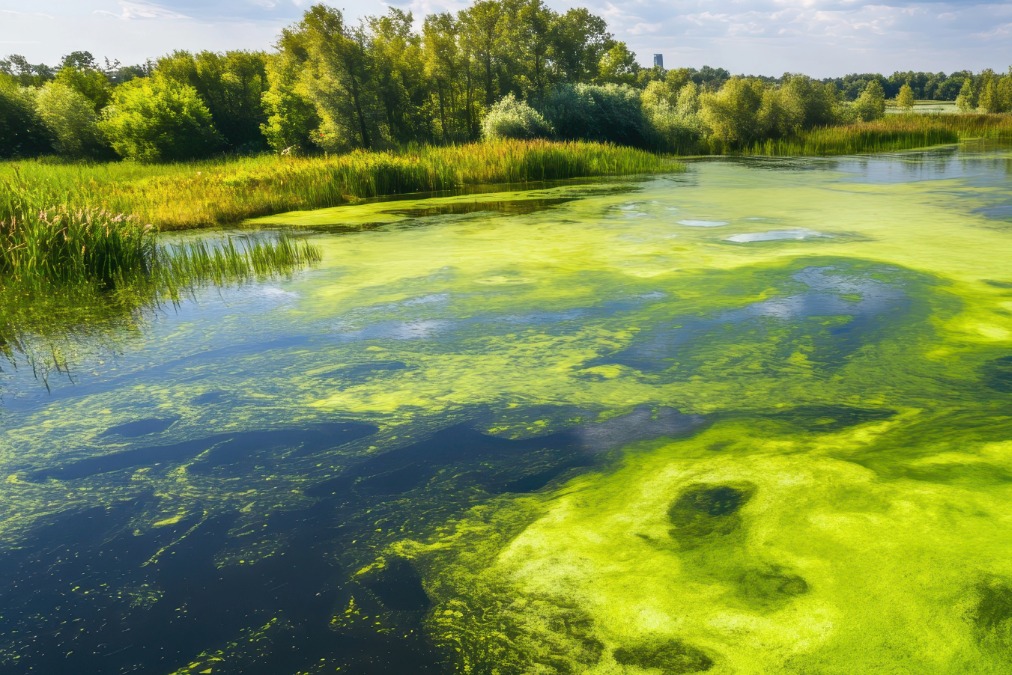
Testing water samples for toxins is critical for ensuring that animals, including humans and their furry friends, remain safe.

Whole Effluent Toxicity (WET) testing measures the collective toxic effect that all pollutants in wastewater have on aquatic organisms

This article explores why fenceline monitoring networks are being installed, the available technologies that can be included, and key considerations for industrial facilities.

New updates on PFAS regulations were released in April 2025.

To minimize the potential impacts on the natural environment from these activities, local and national regulatory entities have established requirements for defining the current baseline ecological conditions.
A commentary on recent ETO updates from April 2025

We first reviewed the U.S. Environmental Protection Agency’s (EPA) PFAS Strategic Roadmap: 2021-2024 in March 2022, and have since posted periodic updates. With the recent conclusion of the 2021-2024 implementation period, we now reflect on accomplishments and speculate about potential future directions.

With significant developments in all three branches of the federal government, 2025 ushered in fundamental changes to implementation of the National Environmental Policy Act (NEPA). Executive action reshaped agency procedures. The Supreme Court clarified the limits of judicial review. Congress continued to push statutory time limits.

What EPA's repeal of the 2009 GHG Endangerment Finding could mean
PFAS are persistent synthetic chemicals that accumulate in soil, water, and in tissues of organisms. Scientists are working to better understand their movement, persistence, and risks to ecological health.

Using Riverbank Filtration to pretreat water can reduce treatment costs, simplify permitting, and improve public confidence in the safety of supply.

Using hydrodynamic simulations to site desalination plants responsibly and minimize environmental impacts.

Structured Decision Making (SDM) is bringing clarity to complex natural resource decisions
New updates on PFAS regulations were released in April 2025.

New testing and measurement techniques for detecting airborne PFAS.
EPA released the final National Primary Drinking Water Regulation (NPDWR) on April 10, 2024.