
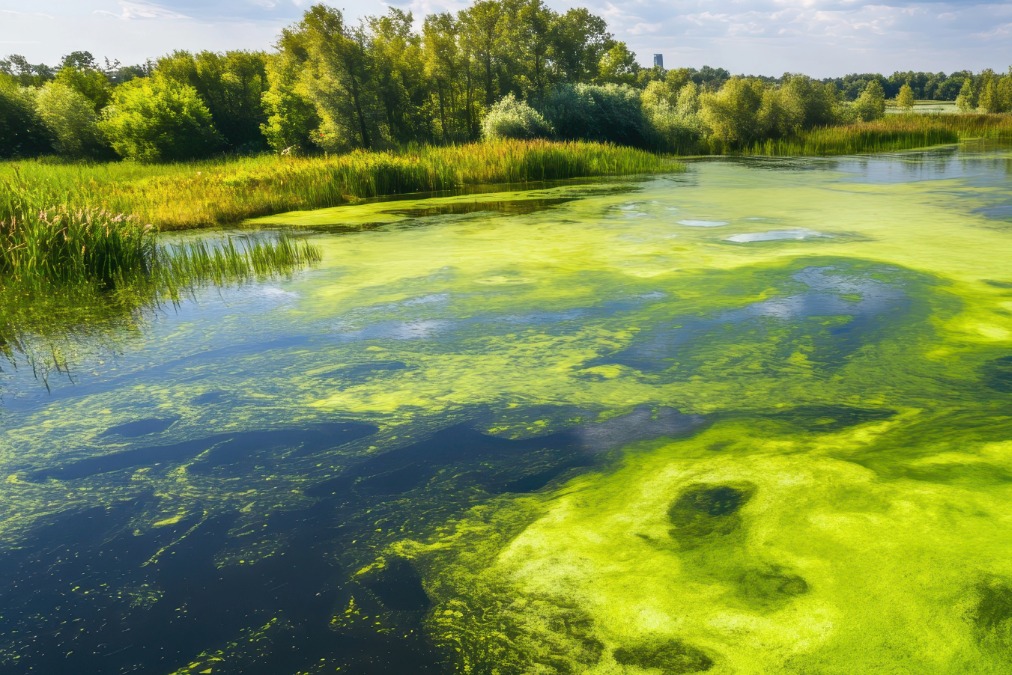
Algae are tiny plants with a not-so-tiny impact—it has been estimated that algae collectively produce about 50% of Earth’s oxygen thanks to their photosynthetic activity. On the other hand, some algae produce toxins that can harm animals, including humans and pets, by triggering effects such as skin irritation, respiratory paralysis, and liver failure. Cyanobacteria, also known as blue-green algae, are one such type of toxin-producing algae. These single-celled bacteria can produce a variety of toxins, including the known liver toxins Microcystins and Cylindrospermopsin, as well as the nerve toxins Anatoxin-a and Saxitoxin.
What Are Harmful Algal Blooms (HABs)?
Toxins can build up to harmful levels when algae populations explode. Such out-of-control growth tends to occur when algae are bathed in warm, sunlit waters and exposed to nutrient-rich material such as fertilizer run-off. Nutrients like nitrogen and phosphorus provide a veritable feast for algae, and the microscopic plants gorge themselves and rapidly reproduce. The result is a so-called harmful algal bloom (HAB). These blooms can occur in both freshwater and saltwater, and they have been reported in all 50 states. Cyanobacterial blooms typically happen during the summer or early fall, but can occur throughout the year.
While some blooms are readily apparent—the surface of the water can appear to be painted green, blue, red, or brown—others are less obvious. It is therefore important to regularly test waterways for harmful algal blooms.

Anyone concerned about a waterway can collect a water sample and have it tested at a reputable lab.
The Costs of Blooms
Algal bloom impacts are much wider-reaching than many people realize.
- Financial costs – In 2015, Washington state closed its recreational razor clam harvest due to harmful algal blooms, a decision that stymied an estimated $40 million in related tourism spending.
- Ecological costs – Sometimes algae grow so prolifically that they form an impenetrable mat on the surface of the water. That dense growth can alter local ecosystems by preventing sunlight from reaching other water-dwelling plants below the surface.
- Health risks – Lakes, rivers, and streams provide many opportunities for fun, especially in the summer. However, there is always the possibility of cyanobacteria in sunlight-drenched waterways. Before swimming, fishing, or coming into contact with a body of water, check with your state and local health departments to determine whether that water has been tested and cleared for recreational use.
How To Test Water for Harmful Algal Blooms?
Testing water samples for toxins is critical for ensuring that animals, including humans and their furry friends, remain safe. Anyone concerned about a waterway can collect a water sample and have it tested at a reputable lab. EcoAnalysts, a Spheros Environmental company, can test for four of the most common algal toxins: Microcystis, Cylindrospermopsin, Anatoxin-a, and Saxitoxin. Our staff work with clients across the United States, and test results can be returned in just a few days. Learn more about our Harmful Algal Blooms testing methods here.
About the Author
Nicole Lundgren is an aquatic toxicologist at the Spheros Environmental Port Gamble Environmental Lab in Washington state. She analyzes water samples from lakes, rivers, streams, and coastlines across the United States to monitor and report harmful algal blooms. She previously volunteered for the SoundToxins program, which provides early warning of harmful algal bloom events to keep people and their pets safe from aquatic toxins and minimize economic losses to Washington state fisheries. As an animal lover and avowed nature buff, Ms. Lundgren is proud to be a part of the solution to harmful algal blooms. Ms. Lundgren can be reached at nicole.lundgren@spherosenv.com.