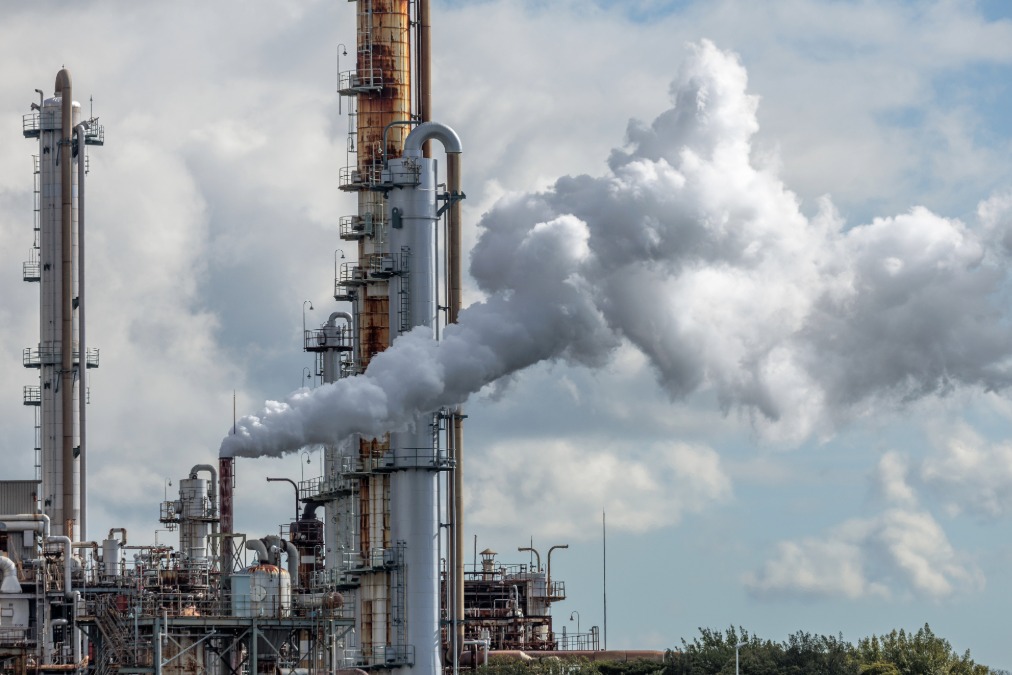
As industries and governments face increasing pressure to reduce emissions and meet ambitious climate goals, carbon capture and sequestration (CCS) has emerged as a promising, if complex, solution. At its core, CCS treats carbon dioxide (CO2) emissions as a waste stream by capturing CO2 and permanently storing it deep underground.
The technologies and science behind CCS are not new, but its application as a climate solution has gained renewed urgency. Sectors considered hard to abate are increasingly looking to underground storage to reduce their CO2 emissions. As technology advances and regulations continue to evolve, subsurface carbon storage presents a practical pathway for industries, innovators, and policymakers who are uniquely positioned to support its implementation.
For legal, environmental, and engineering firms, this progress also creates opportunities to provide expertise in emissions monitoring, greenhouse gas accounting, and regulatory compliance, all of which are essential for successful project implementation.
What is Carbon Capture and Sequestration and How Does It Work?
It is nearly impossible and currently cost-prohibitive to prevent all CO2 emissions. CO2 is a waste product, a by-product, or a co-product of many essential human activities. While many emissions can and should be reduced, difficult-to-decarbonize industries and processes may also need pathways to capture and permanently store residual emissions.
In this context, CCS is the process of capturing CO₂ from point sources or directly from the air, compressing it, and injecting it into deep geological formations, typically at depths greater than 800 meters. These formations, many of which have successfully held natural gas for millions of years, can similarly contain injected CO2 safely and permanently.
This process is not new. The oil and gas industry has used CO2 injection for enhanced oil recovery for decades. Today, the convergence of legacy skills and modern sustainability goals presents another opportunity: the chance to apply long-standing technical expertise to a new, climate-focused purpose.
How does Carbon Capture and Sequestration Work?
CCS projects generally involve three major steps: capturing CO2, transporting or moving it to a suitable storage location, and injecting it into deep underground formations where it can be permanently stored. Once injected, CCS projects require monitoring, verification, and long-term stewardship to help confirm the CO2 remains contained and that the project is achieving its intended emissions-reduction outcomes.
Successful CCS implementation depends on both subsurface science and aboveground environmental management. Storage reservoirs must be carefully evaluated, injection operations must be monitored, and project emissions must be measured and reported accurately. This is where integrated expertise in geology, air measurements, greenhouse gas accounting, and regulatory compliance becomes essential.
Why is Carbon Capture and Sequestration Relevant Now?
The urgency around CCS stems from two converging forces: the need to meet global climate goals and the growing recognition that certain industries cannot fully eliminate emissions through efficiency measures alone.
For organizations and governments pursuing carbon-neutrality targets, CCS offers a viable path to permanently store residual emissions on the road to net zero emissions. Many of the organizations investing in these technologies today are seeking practical actionable pathways to address their carbon emissions.
From a regulatory and financial standpoint, incentives such as the U.S. 45Q tax credit, which provides a credit for permanently captured and stored CO₂, have helped catalyze interest. However, without regulatory certainty and reliable timelines in the U.S., progress remains incremental.
Navigating the Regulatory and Voluntary Landscapes
Globally, CCS is gaining traction, especially in regions with cap-and-invest or carbon pricing programs. Meanwhile, the regulatory and voluntary framework and methodologies for CCS continue to evolve.
In the U.S., greenhouse gas emissions reporting has traditionally focused on methane. However, recent changes at the EPA are impacting CO2 emissions reporting, creating uncertainty that may persist for years. As discussed in our recent analysis, EPA’s Repeal of the 2009 GHG Endangerment Finding: A Data-Grounded Perspective on the Road Ahead, these regulatory shifts could reshape emissions disclosure frameworks. Even with uncertainties about how the U.S. federal government treats CO2 emissions, the 45Q tax credit has created a direct financial incentive for carbon storage projects. At the state level, the California Air Resources Board, for example, regulates carbon emissions and is reevaluating its requirements for CCS projects.
For industries facing emissions penalties or reduction mandates, investing in CCS may be more cost-effective than incurring ongoing emissions costs. Understanding the regulatory landscape and preparing for its evolution positions organizations to act proactively rather than reactively.

Companies with experience in air measurements, greenhouse gas accounting, and regulatory compliance can add significant value to industry efforts.
The Opportunity for Industry Leadership
Companies with experience in air measurements, greenhouse gas accounting, and regulatory compliance can add significant value to industry efforts. Key services that enable these projects to succeed responsibly include monitoring storage reservoirs and project emissions, conducting life-cycle analyses, verifying emissions reductions, and ensuring that CCS systems comply with environmental standards and result in net emissions reductions.
CCS projects offer opportunities to showcase integrated expertise across air quality, greenhouse gas accounting, and subsurface geology for environmental consulting and engineering firms. Whether verifying CO₂ storage, designing monitoring systems, or supporting regulatory compliance, the ability to bridge these disciplines will be essential in the coming years.
Organizations that act early can define best practices, establish monitoring standards, and demonstrate measurable progress toward decarbonization.
Key Takeaways
- CCS permanently stores CO2 deep underground, preventing it from contributing to climate change.
- CCS offers a critical opportunity to reduce emissions from hard-to-abate industries.
- The oil and gas sector has decades of expertise in CO2 capture and subsurface injection and monitoring, positioning it and its partners to lead in CCS deployment.
- Life-cycle analysis and air monitoring are essential to ensure that CCS efforts produce net emissions reductions.
- Regulatory incentives like the U.S. 45Q tax credit are spurring investment, though approval processes remain slow.
- Environmental and engineering firms with expertise in greenhouse gas accounting and air monitoring are well positioned to support industry in this evolving technological and regulatory landscape.
How We Can Help
At Spheros, we combine scientific expertise in air measurements, greenhouse gas accounting, and geological assessment to support CCS projects from concept through compliance, including required verification by licensed geologists and engineers. Whether it is monitoring emissions, verifying storage performance, or navigating complex regulatory frameworks, we help clients seize opportunities to lead the low-carbon transition.
About the Author
Maris Tabor Densmore, PG, joined Spheros Environmental in 2024 with more than 20 years of experience in environmental work and regulatory compliance, including more than 10 years in CCS and carbon management. She leads the Air Measurements Department at Spheros, which includes a diverse team of scientists, sustainability professionals, instrument experts, field staff, technical project managers, data analysts, and software engineers. She and her team are responsible for sustainability projects, fenceline monitoring programs, industrial air quality studies, GHG reporting and research, and community engagement across a broad spectrum of industrial, public-sector, and community-facing work. She has extensive experience working with regulatory agencies, policymakers, and communities on rulemaking, government affairs, groundwater protection, air and greenhouse gas emissions, health and safety, climate, and waste management.
To discuss how Spheros can support CCS, please email Ms. Densmore at maris.densmore@spherosenv.com.