
The U.S. Environmental Protection Agency’s (EPA) Surface Water Treatment Rule (SWTR) was first released in 1989, but emerging contaminants like per- and polyfluoroalkyl substances (PFAS) and increasing microplastic levels are creating new difficulties for traditional water treatment methods. Incorporating natural pretreatment techniques such as Riverbank Filtration (RBF) can help provide consistent water quality and yield for municipalities and other drinking water suppliers, even as contaminants and water sources change.
What is riverbank filtration?
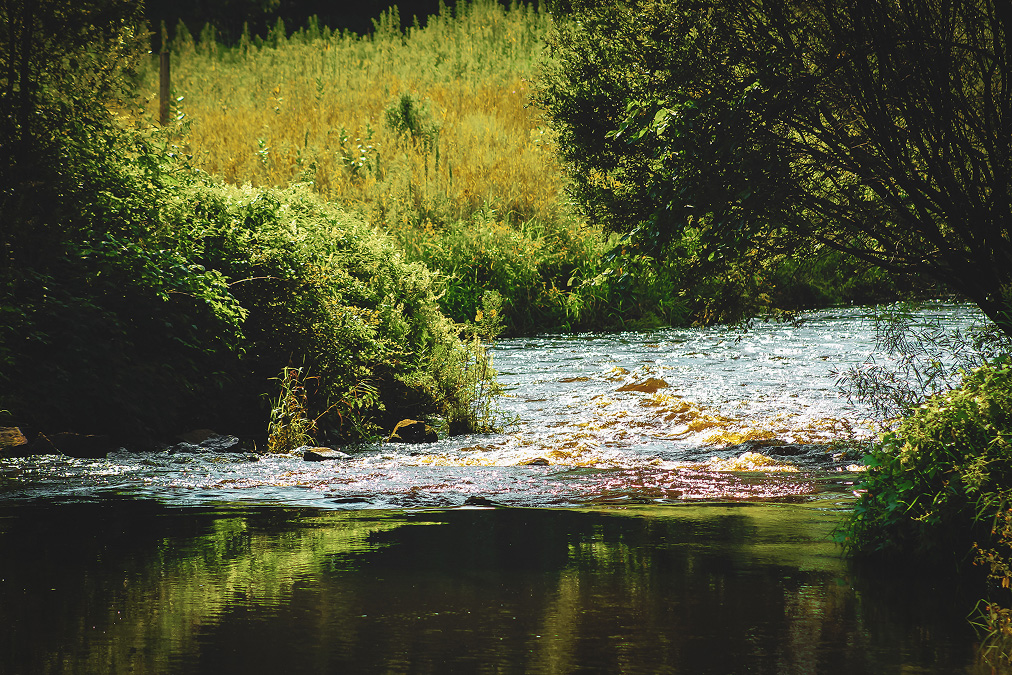
RBF is a natural process achieved by siting a well near a riverbank such that water must filter through sand and sediment. As surface water passes through the sandy aquifer between the river and the well, it undergoes natural chemical and biological reactions that remove pollutants. Even though this process has been used for thousands of years, the integration of RBF wells with newer treatment technologies at drinking water plants is a more recent advancement.
While RBF does not typically replace other treatment technologies, it can help stabilize the overall quality and quantity of available water for treatment regardless of fluctuations in contaminant levels. For example, if a spill is affecting the quality in a river that provides most of the water for treatment, aquifer water can be pulled from RBF wells in the short term while the spill clears the surface water system. RBF is effective at reducing nutrients, organic carbon, pathogens, invasive species, and many other contaminants of concern.
Using RBF to pretreat water can reduce overall treatment costs, simplify permitting, remove the need for infrastructure in river channels, and improve public confidence in the safety and reliability of the water supply in areas where drinking water treatment plants are located downstream from wastewater treatment plants.
Important considerations
The chemical and biological reactions necessary for RBF to be useful to water suppliers take time, and design of these wells requires additional considerations. RBF wells must be sited close enough to a river to increase their yield and to primarily draw on river water, but far enough away that surface water travels a sufficient distance through an aquifer to achieve natural filtration. Water rights engineering is also necessary to account for the lagged impact of well pumping on the river.

Disinfection is very important, because you need it to inactivate the pathogens present in water, Selbes said. Otherwise, people will get sick immediately—like, starting tomorrow.
Relevant regulations
Because RBF wells represent an early stage in the water treatment process, they are subject to distinct regulatory requirements. While most of these rules were established by the U.S. Environmental Protection Agency (EPA), states may have established regulatory primacy with more stringent rules.
All public water systems that use surface water sources are subject to the 1989 U.S. EPA SWTR, which specifies that water from these sources must be filtered and disinfected. The Rule established maximum contaminant levels (MCLs) for common viruses and bacteria, and includes treatment techniques required to protect the public from exposure to pathogens that could negatively impact human health.
RBF wells fall into a special category under the Rule, called “groundwater under the direct influence of surface water,” or GWUDI.
The Interim Enhanced Surface Water Treatment Rule (IESWTR) was passed in December 1998 and established additional requirements for public water systems using the same sources as SWTR that serve populations of 10,000 and above. MCLs were included for additional contaminants, and extra measures, like required covers for newly finished water reservoirs, were included.
The most recent national rule that impacts facilities using RBF pretreatment is the Long Term 2 Enhanced Surface Water Treatment Rule (LT2ESWTR) passed in January 2006. This Rule applies to all public water systems that use GWUDI and primarily addresses health impacts associated with the parasite Cryptosporidium in surface water that feeds into drinking water supply.
Additional RBF innovations
In the 1930s, the Layne Ranney Collector Wells group adapted oil and gas technology to pioneer radial collector wells for water supplies. To construct a radial collector well, wide caissons are installed to depths below the river bottom and draw water in through horizontal lateral screens that extend radially into the surrounding aquifer. These wells minimize the operational footprint, but provide higher yields of filtered river water, resulting in greater operational adaptability. Overall, they also reduce the number of wells and associated infrastructure needed for water treatment plants to use RBF and minimize the environmental impact. LRE Water (a Spheros Environmental company) and Carollo Engineers are planning, designing, and constructing a series of radial collector wells for the City of Aurora’s Prairie Waters System.
How can we help?
Spheros Environmental combines scientific expertise across air quality, water resources, climate services, ecological sciences, and digital technologies to deliver sustainable, science-based solutions for both private and public-sector clients nationwide. Our interdisciplinary teams of scientists, engineers, and technicians collaborate on projects that address complex regulatory, policy, and environmental challenges. With services ranging from ecological consulting and laboratory analysis to real-time air quality monitoring and water management, we provide data-driven solutions that support regulatory compliance, mitigate risks, and advance sustainability goals.
About the Author
Dave Colvin is a Principal Hydrogeologist and Senior Project Manager with over 25 years of experience in groundwater hydrology, water resources, and environmental sciences. He supervises teams of diverse subject matter experts and provides technical leadership to solve today’s water resource challenges. Dave serves as the Mountain Regional Director responsible for managing a diverse group of water resource professionals. His technical expertise subject areas include water supply and storage development, groundwater management, groundwater governance/administration, surface water/groundwater interaction, horizontal wells, RBF, soil aquifer treatment (SAT), managed aquifer recharge (MAR), aquifer storage and recovery (ASR), aquifer characterization, groundwater modeling, and subsidence caused by groundwater pumping.