
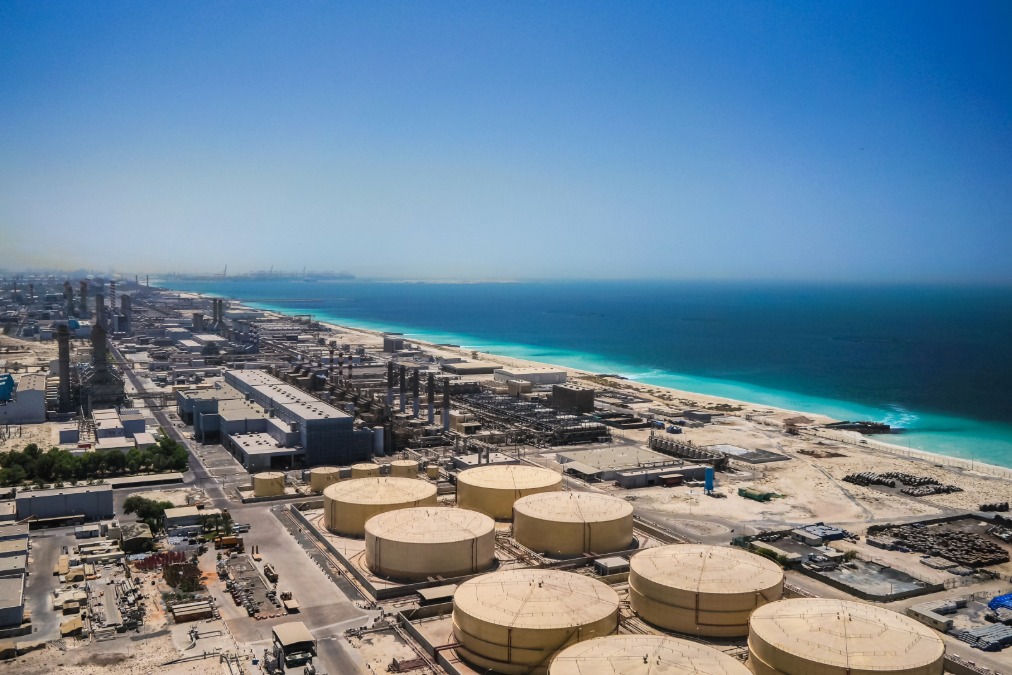
Desalinating seawater is increasingly being used as a strategy to supplement water supplies in coastal areas. In addition to producing fresh water, this process generates a reject stream of concentrated brine, which has a much higher salt-to-water ratio than seawater. This concentrated discharge stream must be effectively mixed with ambient seawater to prevent harmful environmental impacts to the aquatic environment around the discharge. As the required mixing ratio varies based on the meteorological characteristics and tides surrounding the desalination plant, desalination brine circulation modeling can help determine optimum locations to site planned and future operations.
What is Desalination Brine Circulation Modeling?
It’s the use of hydrodynamic simulations to predict how concentrated saltwater from desalination plants disperses in coastal environments. These models help identify discharge locations that minimize ecological disruption and support sustainable operations.
Why Mix the Discharged Water?
Discharge water is denser than seawater since it contains significantly more salt. If it is not properly diluted, it can sink and form a high-salinity layer along the seabed that prevents oxygen exchange with the surface. This can cause benthic species to die out, impacting both the environment and local industries. For example, in Corpus Christi, TX, oyster fisheries would be greatly impacted if improper brine discharge were to cause a significant portion of the local oyster population to die off. Once established, desalination plants are required to conduct bioassay testing to acquire permits, as my colleague Michelle Bennet detailed in her recent piece on the National Pollutant Discharge Elimination System.

If a desalination plant is located in a bay where there is good mixing but low exchange with the open ocean, discharged brine can raise the salinity of the surrounding water and cause detrimental impacts to the surrounding ecosystem.
Modeling Options for Desalination Impact Assessment
There are a number of available models that can evaluate estuarine or ocean water circulation around a proposed desalination plant site. In addition to widely available modeling options, universities professors and research consortium often write their own code to model potential scenarios. While these are often more robust, they also require significantly more computer power than publicly available licensed software.
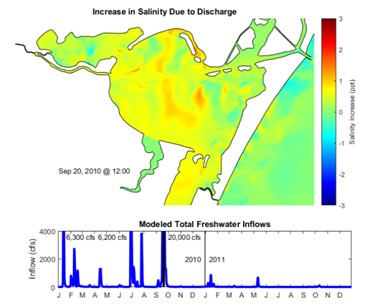
In 2019, Spheros Environmental conducted a 2-yr modeling study for the Port of Corpus Christi, TX, to determine whether proposed brine discharge would potentially damage the surrounding ecosystem. Researchers from the University of Texas at Austin partnered with Spheros Environmental scientists to develop a SUNTANS (Stanford Unstructured Nonhydrostatic Terrain-following Adaptive Navier Stokes) hydrodynamic model of the Corpus Christi Bay system. The model was robust and reliable, but had to be run by a supercomputer, making it challenging to use for a wide range of projects. Ultimately, it helped generate a report that resulted in the permitting of a desalination plant that would discharge into the Corpus Christi Ship Channel near Harbor Island.
The Environmental Fluid Dynamics Code Plus (EFDC+) is a widely available licensed software that was developed with support from the U.S. Environmental Protection Agency (EPA). This modeling software is easy to use, and can be run from a personal laptop. The results it generates are also specifically formatted to be accessible to a wide-ranging audience. Spheros Environmental used this code in 2023 to examine additional proposed desalination brine discharges into Corpus Christi Bay, leading to “go / no go” decisions regarding facility options for the region.
Key Takeaways
As growing industrial development demands higher-yield water supplies, coastal areas with access to seawater are increasingly turning to desalination plants to supplement their existing water sources. Modeling can project the impacts of brine discharge under normal conditions and a range of adverse scenarios, like multiple-year-long droughts, to help ensure desalination plants are located at sites that minimize their environmental damage.
About the Author
Dr. Jordan Furnans, PhD, P.E. – Spheros Environmental, has 24 years of professional experience in both field hydrologic data collection and analysis of data through the development and application of numerical models. He specializes in the areas of water rights accounting; coupled field and model hydrodynamic investigations of estuaries, lakes, and rivers; water availability modeling; watershed hydrology planning and management; floodplain management; hydrographic and sedimentation survey methods; and freshwater inflow and instream flow requirements for ecosystem health. Dr. Furnans also has expertise in groundwater well design and permitting support.
If you have a need related to desalination brine circulation modeling, email Dr. Furnans at Jordan.Furnans@spherosenv.com.