
The Challenge
Prescribed fire practitioners and land managers need to understand how planned burns may affect smoke, air quality, and greenhouse gas emissions before making burn decisions. While sophisticated fire emissions and smoke models can provide this information, accessing and using these tools traditionally requires specialized software, data, and technical expertise.
The Joint Fire Science Program and USDA Forest Service needed a more accessible way to put advanced smoke modeling capabilities directly into the hands of decision-makers responsible for planning and managing prescribed fires.
Our Solution
Spheros Environmental worked closely with the USDA Forest Service AirFire team to develop BlueSky Playground, a web-based application that provides easy access to the complex models within the BlueSky smoke modeling framework.
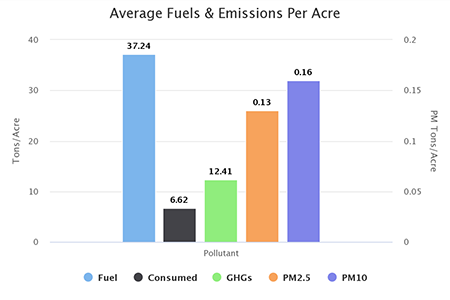
The application allows prescribed burn practitioners and land managers to enter basic information about planned fires and evaluate forecasted smoke and air quality impacts to support burn/no-burn decisions. Users can access a sophisticated chain of fire emissions models through a web interface without downloading specialized software or datasets.
BlueSky Playground also provides access to a running archive of forecasted meteorological model data for use in air quality modeling. Built-in collaboration capabilities allow users to share model settings and results with colleagues and project partners, supporting more informed and coordinated fire management decisions.
USDA Forest Service
Air Quality Modeling and Software Development Consultant
Results +What makes this unique
BlueSky Playground makes sophisticated fire emissions and smoke modeling more accessible to prescribed fire practitioners and land managers, allowing users to evaluate potential smoke, air quality, and greenhouse gas impacts through an intuitive web-based environment.
By removing the need to download specialized software or independently obtain complex modeling datasets, the application streamlines access to the information needed for burn planning. Its ability to archive meteorological forecast data and share model settings and results also supports collaboration among agencies, colleagues, and project partners.
The project demonstrates Spheros’ ability to integrate air quality science, climate considerations, forecasting, emissions modeling, and software development into a practical digital solution that translates complex environmental models into actionable information for real-world land management decisions.