The Challenge
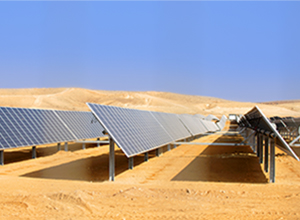
Development of the 550-MW Desert Sunlight Solar Farm required construction of a large-scale photovoltaic facility and more than 12 miles of transmission infrastructure on public lands near Desert Center, California. The project area included sensitive biological resources, including desert tortoise, nesting birds, rare plants, kit fox, burrowing owl, badger, and jurisdictional waters.
Protecting these resources while maintaining an efficient construction schedule required extensive pre-project surveys, careful permitting and planning, and ongoing biological compliance throughout construction.
Our Solution
Spheros Environmental worked cooperatively with First Solar throughout project permitting and construction compliance, developing and implementing a comprehensive biological resource management program designed to protect sensitive species while minimizing impacts to the construction schedule.
The team conducted desert tortoise protocol-level surveys across more than 12,000 acres and provided desert tortoise health assessments, translocation, and monitoring. Additional work included rare plant surveys and salvage, invasive weed surveys and control, insect inventories, surveys and exclusion for burrowing owl, kit fox, and badger, and avian point counts, nest surveys, and mortality studies.
Spheros also prepared key environmental documentation and management plans, including a Biological Resources Technical Report and Biological Assessment. Project clearance was strategically completed in three phases to reduce the need for costly re-clearing and help construction activities move forward efficiently.
Biological Resources Consultant
Results +What makes this unique
The Desert Sunlight Solar Farm reached commercial operation without a single project delay attributed to biological resource concerns. Desert tortoises were successfully translocated, sensitive nests were avoided with a success rate exceeding 95%, and other biological resources were managed to the high level of protection required for development on public lands.
The team’s adaptive approach was particularly valuable following a 100-year storm event in 2013, when the project area was successfully re-cleared without construction downtime. The project also included the first successful long-distance passive relocation of kit fox.
By integrating biological science, permitting, field monitoring, and close coordination with the construction team, Spheros helped demonstrate how large-scale renewable energy development and rigorous natural resource protection can be successfully managed together.