

The Challenge
The U.S. Army Corps of Engineers needed to evaluate approximately 21,000 cubic yards of sediment within the Lake Washington Ship Canal before future maintenance dredging activities could occur. Because no previous dredged material characterization had been conducted at the site, the project required a comprehensive assessment to determine whether sediment was suitable for disposal at the Elliott Bay non-dispersive disposal site while meeting regional environmental and regulatory requirements.
Our Solution
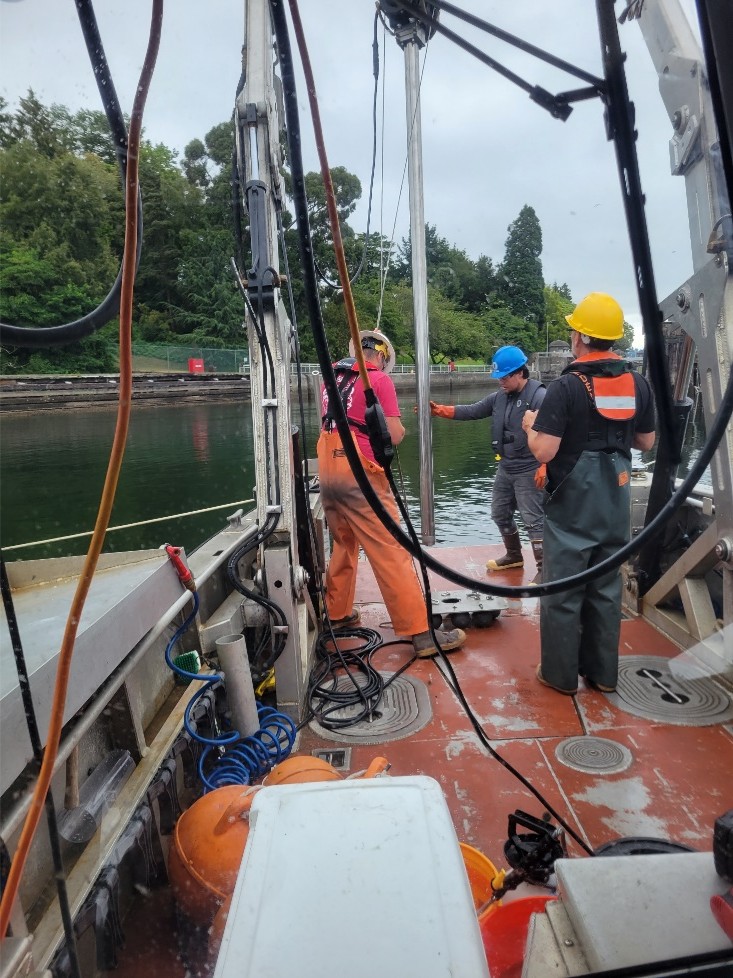
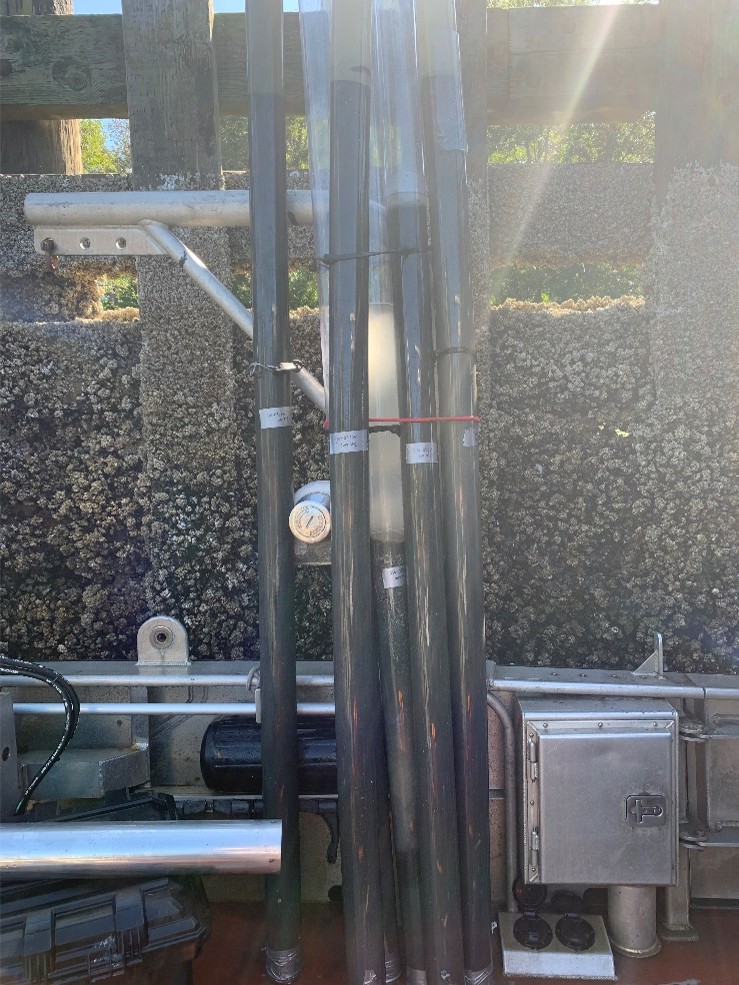
Spheros Environmental developed a Sampling and Analysis Plan in accordance with the Dredged Material Management Program (DMMP) User Manual and produced GIS mapping to identify dredged material management units and sampling locations. The team conducted vibracore sampling at five locations representing seven DMMUs, overcoming challenges posed by heavy vessel traffic, lock operations, strong water flows, and difficult sediment conditions. Following field collection, Spheros completed laboratory bioassay testing and prepared a comprehensive Dredged Material Characterization Report documenting methods and analytical results.
Prime
Results +What makes this unique
Despite challenging site conditions, including high vessel traffic, strong lock-induced currents, and low core recovery in predominantly sandy sediments, Spheros successfully collected and characterized representative samples for all seven dredged material management units. The project demonstrates the team’s ability to adapt field operations in complex marine environments, integrate regulatory and scientific requirements, and deliver the data needed to support informed dredging and disposal decisions.
Project Experts